MRDN-2023-014 · Tier I
Funding the trials that markets won't.
Meridian Institute is an independent public charity that finances late-stage clinical trials in disease areas where commercial pharmaceutical sponsors decline to invest — pediatric tuberculosis dosing, neglected tropical disease therapeutics, snakebite antivenom standardization, and maternal sepsis interventions in low-resource settings.
Since 2014 we have deployed $248 million in audited grants across 47 trials in 22 countries. Ninety-one cents of every dollar raised funds direct trial activity. Eleven of our trials have produced negative primary endpoints; all were published, open access, in full.
$248M
Deployed since 2014
47
Trials funded
22
Countries
91.4%
Program expense ratio
§ 01 — By the Numbers
A decade of independently audited outcomes.
Cumulative grants — 2014 to 2024
$248M
Audited annually by Deloitte LLP. Functional expense breakdown published in Form 990 each Q1.
Active trial sites
132
Across teaching hospitals, district health systems, and field clinics in 22 sovereign jurisdictions.
Peer-reviewed publications
186
All papers open access. Eleven of which report negative or null primary endpoints — published in full.
Participants enrolled
94,317
Enrolled with informed consent under IRB-approved protocols across all funded studies.
Regulatory submissions accepted
29
Submissions to WHO Prequalification, U.S. FDA, EMA, and national regulatory authorities.
Average overhead ratio (4-yr)
8.4%
Held within a one-point band across four consecutive audited years. GuideStar Platinum 2024.
§ 02 — Where the Market Fails
Disease without capital is the modern public-health crisis.
Pharmaceutical capital flows toward the trials it can recoup. A maternal sepsis intervention in rural Mozambique returns no market multiple. A pediatric tuberculosis dose-finding study returns no patent runway. A snakebite antivenom standardization protocol returns no shareholder value at all.
And so they are not run. Not because the science is unclear — it usually is not — but because the economic case for running them does not close.
The cost of inaction is measurable. The World Health Organization estimates that snakebite envenomation alone kills approximately 138,000 people each year, the vast majority in agricultural communities across South Asia and sub-Saharan Africa. Effective antivenom has existed for over a century. What does not exist is a coordinated, regulator-grade trial program to standardize formulations across regions.
This is the gap Meridian was founded to close.
We do not invent compounds. We do not run laboratories. We do not duplicate the work of the NIH or the Wellcome Trust. We do something narrower, and we believe more catalytic — we underwrite the last-mile, regulator-grade evidence that takes a known intervention from a working idea to a registered therapy in the formularies of countries that need it.
The science is rarely the bottleneck. The trial funding is.
§ 03 — Our Funding Model
Five disciplines that govern how we deploy capital.
-
— 01Market-failure firstEvery grant must answer one threshold question: would this trial be funded commercially in the next five years without us? If the honest answer is yes, we decline. Our charter prohibits us from competing with industry capital that would otherwise materialize.
-
— 02Pre-registered endpoints, no exceptionsNo grant disburses until the trial's primary endpoint, statistical analysis plan, and data-sharing protocol are publicly registered. We do not fund post-hoc science. We do not fund retrospective rescoping. We do not fund studies whose endpoints can be shopped after the data arrives.
-
— 03Open publication, including failureEvery Meridian grant is contractually obligated to publish results in an open-access, peer-reviewed venue — including studies that fail to meet their primary endpoint. Eleven of our trials have failed. All eleven are published. Negative results are evidence.
-
— 04In-country principal investigationWhere a trial is conducted, that country's institutions lead it. We require the principal investigator and at least sixty percent of named co-investigators to be affiliated with research institutions in the trial-host country. We will not fund extractive science.
-
— 05Audited every year, without exceptionMeridian's accounts are audited annually by Deloitte LLP. Our 990 is published in the first quarter of each calendar year. Our scientific advisory minutes are summarized publicly within sixty days of each session. We do not believe institutional gravitas excuses opacity.
§ 04 — Trial Outcomes
What changed after Meridian-funded trials completed.
| Research area | Before Meridian funding | Post-trial outcome |
|---|---|---|
| Pediatric tuberculosis dosing | Four-year stall on fixed-dose combination validation; no commercial sponsor identified after 2018. | Phase IV completed in 18 months across 9 sub-Saharan sites; WHO formulary update issued Q2 2024. |
| Maternal sepsis rapid diagnostic | Promising lactate point-of-care assay; no funder for field validation in low-resource obstetric units. | Validated across 14 district hospitals; adopted into Mozambique national obstetric guidelines, 2024. |
| Sub-Saharan snakebite antivenom | Three competing formulations; no head-to-head efficacy data; clinicians selecting by availability alone. | Comparative trial published in The Lancet Global Health, 2024; WHO Prequalification submitted. |
| Drug-resistant typhoid in pediatrics | Vaccine candidate stalled in Phase III for seven years; sponsor exited program in 2017. | Re-initiated Phase III with Meridian co-funding; interim analysis crossed efficacy boundary, 2023. |
| Cervical cancer screening — HPV-DNA | Self-sampling protocol validated in high-resource settings only; uptake gap in rural districts. | Pragmatic trial across 31,400 women in 4 countries; screening coverage rose from 12% to 71% in pilot sites. |
§ 05 — Research Portfolio
Six grants currently in active disbursement.
MRDN-2024-002 · Tier I
Sub-Saharan Snakebite Antivenom Standardization
Active · EnrollingMRDN-2023-021 · Tier II
Maternal Sepsis Point-of-Care Lactate Assay
Active · Analysis phaseMRDN-2024-007 · Tier I
Antimicrobial Resistance — Neonatal Sepsis Empiric Therapy
Active · EnrollingMRDN-2024-011 · Tier II
Visceral Leishmaniasis Combination Therapy
Active · Year 2 of 4MRDN-2024-019 · Tier I
Postpartum Hemorrhage — Heat-Stable Carbetocin Implementation
Active · Site initiation§ 06 — Ways to Contribute
Three doors into the same mission.
— Individual Donor
Annual giving
From $25 · monthly or one-time
Recurring individual gifts make up roughly twelve percent of Meridian's annual revenue and provide the operating predictability that the rest of our portfolio depends on. Every donor receives the audited Form 990 and the annual scientific summary.
- Quarterly grantmaker updates
- Annual audited financials
- Tax-deductible in the United States, United Kingdom, and EU
— Foundation Partner
Co-funded portfolio
$250,000 — $5M per cycle
Private foundations and donor-advised funds engage Meridian as a deployment partner — capital flows through our diligence and grant-administration infrastructure, with quarterly portfolio reporting and direct PI access for partners contributing above the $1M threshold.
- Dedicated philanthropy lead
- Quarterly portfolio briefings with PIs
- Co-branded reporting on request
- Invitation to Scientific Advisory Council convenings
— Trial Sponsor
Full-trial underwriting
Bespoke — typically $3M–$25M
For sovereign development agencies, large foundations, and ultra-high-net-worth donor-advised funds underwriting a complete trial. Engagements begin with a confidential diligence meeting in Washington, Geneva, or virtually. Data ownership and publication rights remain with Meridian and the trial PI.
- Single-trial naming and reporting
- Direct PI and Scientific Advisor relationship
- Independent audit attached to engagement
- Multi-year disbursement schedules supported
Meridian occupies a space that almost no one else does — the rigor of a regulator-grade trial program with the patience to run negative-result studies and the discipline to publish them. Their portfolio is genuinely the trials that would not otherwise have happened.
— Trial collaborators and convening partners
WHO Geneva
London School of Hygiene
PATH Seattle
Médecins Sans Frontières
Wellcome Trust
DNDi Geneva
Karolinska Institutet
KEMRI-Wellcome Kilifi
§ 07 — Governance
Scientific Advisory Council & Board leadership.
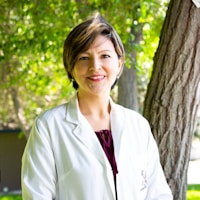
Dr. Adaeze Okafor-Strauss
MD, PhD · Founder, Board Chair
Former Director, NIH Office of AIDS Research. Previously Senior Vice President, Bill & Melinda Gates Foundation Global Health Program. Trained at Johns Hopkins SPH and Lagos University Teaching Hospital. Founding chair since 2014.

Prof. Jonathan Reeves Whitaker
PhD · Scientific Advisory Council Chair
Regius Professor of Infectious Disease, University of Oxford. Author of 312 peer-reviewed publications in tuberculosis, drug-resistant infection, and clinical trial methodology. Former Chair, MRC Clinical Trials Methodology Hub.

Dr. Priyanka Subramaniam
MBBS, MPH · Director of Trial Operations
Twenty-one years of clinical trial operations across the Indian Subcontinent and East Africa. Former Country Director, Drugs for Neglected Diseases initiative (India). Lead author on the WHO 2023 guidance on community-led trial monitoring.

Dr. Henrik Lindqvist
MD, PhD · SAC Vice Chair, Biostatistics
Professor of Biostatistics, Karolinska Institutet. Methodological lead on three pivotal vaccine trials submitted to EMA and WHO Prequalification. Chair of the Cochrane Methodology Review Group, 2019–2023.

Ms. Carmen Reyes-Tolentino
JD, MPA · Board Treasurer & Audit Chair
Former General Counsel, Open Society Foundations. Twenty-six years in nonprofit governance, fiduciary oversight, and regulatory compliance across U.S. and EU jurisdictions. Independent director on three other 501(c)(3) boards.

Dr. Fatuma Yusuf Hassan
MBChB, MMed · SAC Member, Ethics
Senior Lecturer in Bioethics, University of Nairobi College of Health Sciences. Co-author of the 2024 African Union framework on equitable benefit-sharing in transnational clinical research. Member, WHO Research Ethics Review Committee.
— IRS Status
501(c)(3) public charity
— Annual Audit
Audited by Deloitte LLP
— Transparency
GuideStar Platinum 2024
— Disclosure
Form 990 published annually
§ 08 — Frequently Asked
The questions our donors and partners ask most.
- Where do funds go?
- Approximately 91 cents of every dollar raised funds direct clinical trial costs — investigator stipends, site monitoring, drug manufacturing for trial use, biosample logistics, and participant compensation. The remaining 9 cents covers governance, audit, and grant administration. Full functional expense breakdowns appear in our annual IRS Form 990, published in the first quarter of each calendar year.
- How are trials selected?
- A standing Scientific Advisory Council of eleven independent investigators reviews proposals quarterly against four criteria — disease burden in underserved populations, market failure (no commercial sponsor likely within five years), trial design rigor, and feasibility of regulatory pathway. Approximately six percent of submitted proposals are funded. The selection rubric and council minutes are published within sixty days of each session.
- What is your overhead ratio?
- Our 2024 functional expense ratio was 91.4 percent program / 6.2 percent management and general / 2.4 percent fundraising. This ratio has held within a one-point band for four consecutive audited years. We do not pursue ratio optimization at the cost of governance — we believe institutional rigor is itself part of program delivery, and we account for it as such.
- How are outcomes measured?
- Every funded trial commits, before disbursement, to a pre-registered primary endpoint and a public data-sharing plan. We track three downstream outcome metrics — regulatory submission, peer-reviewed publication, and inclusion in clinical guidelines. All three are independently audited and reported in the annual Meridian Outcomes Brief alongside the Form 990.
- Do you publish negative results?
- Yes — publication of negative or null trial outcomes is a contractual condition of every Meridian grant. Eleven of our forty-seven funded trials have produced primary-endpoint failures. All eleven are published in open-access peer-reviewed venues. We consider negative-result publication to be among the most undervalued public goods our charter can deliver.
- How is the Institute governed?
- Meridian is governed by a nine-member Board of Directors, none of whom are compensated for board service. The Board meets quarterly under an independent chair, with a separate Audit Committee chaired by a non-officer trustee. The Scientific Advisory Council operates independently of the Board, with a distinct charter, and meets six times annually. All charters are published.
- What is your relationship with pharmaceutical companies?
- Meridian accepts no industry funding for general operations or core overhead. We will co-fund a specific trial alongside an industry partner only where the trial would not otherwise occur, and only under a written agreement guaranteeing independent data ownership by the trial PI, unrestricted publication rights regardless of outcome, and no industry seat on the Data Safety Monitoring Board.
- How can institutional partners engage?
- We work with private foundations, sovereign development agencies, and high-net-worth donor-advised funds through bespoke trial-sponsorship agreements typically ranging from $3M to $25M. Engagements begin with a confidential due-diligence meeting with our philanthropy team in Washington or Geneva. We provide audited financials, scientific portfolio briefings, and PI introductions before any commitment is signed.
— 01
— 02
— 03
— 04
— 05
— 06
— 07
— 08